Showing posts with label 4e. Show all posts

Friday, June 6, 2014

Dynamic Level Adjustment


[EDIT: it's easier to just scale UP the monsters. In 4E, they get +1 to attack and damage and defenses vs PCs and -1 to damage taken per point of scaling. So if you're supposed to treat a PC as level 2, and the monster is level 1, then he'll have +1 attack, damage, defense, and DR (damage resistance) versus that PC. If the "level cap" of an area is 4, then the first "point of scaling" comes in at cap+2. So the scaling is applied to the difference between the PC's level (if higher than cap) - cap + 1. So a level 6 PC in a level 4 area has 1 point of scaling applied (6 [level of PC] - 4 [level cap of area] + 1 [to reward actually being a higher level than the area] = 1). So a level 5 PC in an area capped at 4 receives NO points of scaling, see? That's how GW does it anyway; and that's the point of this post. Read on for more info.] 

Guild Wars 2 has this great thing called dynamic level adjustment. It makes questing in lower level areas worthwhile and challenging, and facilitates play with a party of different levels.

You can import this into D&D.

For my 4E game, we're going to be doing it (tomorrow) like this:

  1. If you're higher level than the area you're in, you are downleveled to level cap of area + 1. 
  2. For each point of difference between your actual and downward-adjusted levels, take a token.
  3. Subtract from the following a number equal to the number of tokens in front of you:
    • attack rolls, damage rolls, and skill checks:
    • hp x (hp gained per level) [bloodied and surge values will need recalculation]
For OSRish games, maybe just subtract HD/2 in hp per de-level token? So wizards would subtract 2 hp/level, clerics 3, fighters 4. (Note: this is what 4E does too; the classes gain a static amount per level = HD/2, but the HDs are bigger. Paladins have an invisible d12 HD, fighters a d10.) You'd still have the benefit of your spells, gear, and attack bonuses. 

Something like this doesn't make sense for every campaign. But for campaigns that need to be a bit more grounded and dangerous and/or need to equalize lower and higher level members in a party, maybe this makes some sense. 

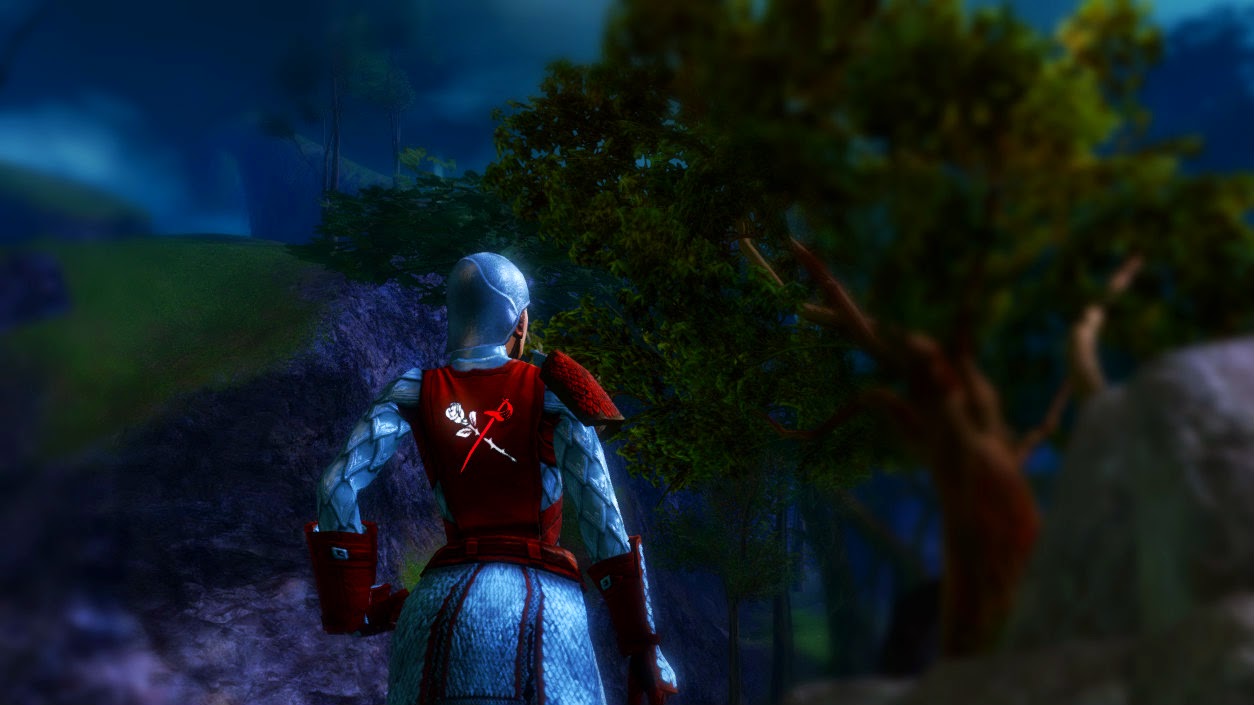
By the way, if you're ever on Tarnished Coast, I'm Kuria Thackeray, DPS guardian of the Royal Order of Seraphs Errant [ROSE]

Friday, March 21, 2014

Yet Another Combat Hack

This is primarily for 4E. Could be used elsewhere though.

The goal of this is to:

  • speed things up
  • keep players focused 
  • nail down the fiction corresponding to each attack
  • make monsters more interesting 
  • provide more risk/reward choices

Primary Module

When monsters miss, they provoke an opportunity action from enemies that threaten them. This action is a standard action: attack, move, whatever. 

When a player misses a monster that threatens it, that monster uses its miss reaction. 

You need to give monsters these reactions. By default, it could just be a damage roll, no attack roll. You do not want the potential to whiff here. If a player misses, something bad will happen. 

You can vary miss effects by margin of failure if you want. 

Overkill Module

When a player attacks, ask him exactly what he's doing, how he's aiming, etc. if he doesn't say ("dunno just attacking") this module doesn't apply. 

When a PC crits or hits the AC / Defense + 5 (so a 21 vs AC 5/16), the PC does just what he wanted. It bypasses hp. The effect does what it does. If he was trying to cut dude's head off, it is now rolling on the floor. If he was aiming for the troll's eye, that eye now has an arrow in it. 

Ongoing Effect Module

Give monsters effects (like auto damage) that proc at the start or end of combat turns rather than rounds. 

This is perfect for a zombie that has grabbed a PC and is biting at his neck. Say that the zombie is currently biting at fighter's neck. It's now cleric's turn. Cleric! What do you do!? Fighter's about to buy it! No waiting around for next round pshaw. 

Movement Module

GM moves monsters all at once at the top of the round. They act as normal on their initiatives but do not move. In 4E terms, they use their move actions at top of round. 

Players can spend a standard action to reroll initiative and take the higher result. 

Weird option: when you attack, reroll initiative and take the new one if lower. 

Optional Module
GM doesn't roll attack or damage. 
Instead, when you would attack a PC and they would be aware of an able to respond to the attack, describe the attack ("the dragon's chest is expanding; his mouth is about to open"), and ask what they do. 

They can counterattack or defend. 
If they counter, they attack as normal. 
If they hit, they do damage as normal and suffer as normal from the enemy's attack. 
If they miss, they only suffer. 
If they crit (or get a hard hit, DC+5), they do damage and suffer none. 
If they defend, ask them how. 
Based on desrciption choose appropriate defense (AC, reflex, etc). 
Have them roll their defense bonus (= Defense - 10)
Against DC = 10 + attacker's attack bonus (old school: 1+HD, 4E, 5+Level)
On a hit, they evade or block as they described. 
On a hard hit/crit, not only that, but they leave the enemy in poor position: PC may take opportunity action
On miss, suffer damage as normal; GM says how 

If you would make an attack of which they are unaware, make it as normal but do not narrate it. The attack roll is a saving throw to avoid the effect. This bypasses hp if it hits. Suddenly a javelin is in your side. 


Sunday, March 16, 2014

Alternative to "Dying" in 4E

Use -C's On a Table for Avoiding Death with 4E to get rid of the "Dying" condition and replace it with something more interesting.

  • When you attack, say what is this attack trying to do to the PC, fictionally
  • When a PC hits 0 or fewer hp, make death saving throws until you hit one or until you run out
  • In other words, not one per turn—just keep rolling until you get 10+ or run out
  • If you run out, or if the PC is at his negative bloodied value in hp, the thing that, fictionally, the attack was trying to do happens, to its full extent, whatever that means fictionally. 
  • If the PC hits a death saving throw, stop making them and have the PC roll on the table for avoiding death, linked above. 
  • I use the 1d6 + negative hp method. 
  • Instead of just going down and having to sit there potentially doing nothing, the player will likely still be able to contribute, just with lesser effectiveness and with increased risk that the next hit will be really really bad.
  • If the player is then actually dying (fictionally) or comatose or something, roll up a new PC immediately (just take a level 1 monster and reskin it). Get that player back in the game ASAP.
  • If a player rolls a 20 on the death saving throw, they DO NOT roll on the table. Instead, they can spend a healing surge immediately. Turns out they dodged/withstood the shot after all. 
  • Treat injuries received in this manner as diseases per the standard 4E disease rules (check to recover after extended rest, presuming enough time has elapsed according to -C's chart). 

I did this tonight, and it worked great. Our dragonborn pally tanked a warg and a slew of goblins, got his leg bitten into (1/2 movement speed) and got his abdominal wall punctured with a gross goblin spear (dazed 1 round, sickened until healing). 

Monday, March 10, 2014

4E Core Deity Selector

Simple thing for generating a 4E deity description. Mostly for my use.

Select a 4E Deity

Deity descriptions found here.

A Cumbersome Blackmail System

How to set up a blackmail opportunity (but in a cumbersome way that I no longer like).

First, you need a scandal: http://detectmagic.blogspot.com/2014/02/scandal.html.

Then you need a

Target

The target of your blackmail is the moneybags. The target may not have committed the blackmailable offense himself, but he is in a position to pay to keep things quiet.

To get a target:

  • make something up, or:
  • use an NPC generator, then:
  • determine social position of target
    1. roll (low/med/high): 1d20 (9- low / 10+ med / 18+ high)
    2. interpret roll
      1. high: target is tier 3
      2. med: target is tier 2
      3. low: target is tier 1
    3. interpret social tier
      1. tier 1 
        1. smart merchant
        2. decorated officer
        3. influential priest
        4. aristocrat
        5. lower council member
        6. enterprising alchemist
      2. tier 2
        1. connected merchant
        2. blood very old and blue
        3. upper council
        4. religious magisterium
        5. accomplished wizard
        6. military council
      3. tier 3
        1. dynastic family
        2. close council
        3. high priest
        4. monopolist
        5. general
        6. archmage

Subject of Scandal (50% chance target, else target's . . .)

    1. spouse
    2. lover
    3. sibling
    4. aunt/uncle
    5. father/mother
    6. grandfather/mother
    7. political / business / religious ally
    8. child
    9. subordinate
    10. superior
Always name everyone. Have lists or generators handy.

Base Payment

The base payment is the maximum the person is willing/able to pay to prevent the revelation of the worst kind of scandal.

You can do this according to what seems legit to you; or, if you're using 4e like I am and if your economy works the way mine does:
  • choose social level within tier, or:
  • roll 1d10 to determine social level within social tier
  • user level to determine base payment
  • a standard threshold = XP in gp of a standard creature of target's level
  • further specify base payment according to identity of subject:
    • target: as solo
    • person target cares most about: as elite
    • target's family: standard
    • other relation: minion

Payment Modifiers

Some factors can alter how much a target is willing to pay, or if they're willing to pay at all (take highest payout):
  • If the scandal involves a capital crime or the target stands to lose everything, the base payment stands
  • If the target is responsible for loved ones who will suffer from the scandal, the base payment is halved
  • If the target will suffer consequences from which he expects to rebound:
    • If the target is respectable, base payment is halved
    • If the target is shameless, base payment 1/10
  • If the target expects no real consequences, payment refused 

Proof

Okay, but what proof do you have?
  1. testimony of unreliable/compromised witness
  2. testimony of single reliable witness
  3. testimony of multiple witnesses
  4. knowledge of something otherwise unknowable
  5. magical surveillance tapes
  6. personal effects of subject
  7. damning correspondence / records
  8. rumor
  9. personal sign/sigil of subject in compromised context (e.g., brand on illicit goods)
  10. signs in the body /possessions of the subject 
Note that, depending on your setting, the value of testimony may be altered via magical means of lie detection, penmanship, ownership, divination, etc. 

And how did you come to find this proof?

1 witnessed act/signs/evidence yourself
2 overheard subject / witness discussing / confessing / bragging
3 found correspondence/records just lying around
4 found evidence while pickpocketing/heisting
5 witness came forward with info expecting reward or as payment for debt
6 intercepted correspondence / shipment

Confronting the Target

To blackmail the target, you've got to blackmail the target. How? This is up to the players, but here are some ideas: 
  1. write a letter requesting a meeting
  2. attend a social function where he is certain to appear
  3. hang out at his favorite club
  4. knock on his door

Making the Proposal

When the party actually proposes the scheme (including the desired payout) to the target:
  • if target is honorable and is overcome with guilt, he can't be blackmailed; he reveals it himself within the week, no matter the consequences
  • if the target is arrogant and well-connected and secure, he dismisses the extortion and sends assassins after the extortioners; they will arrive in 2d20 hours if not right now, from behind.
  • if the target is not overcome with guilt, he will ask for proof. 
    • If the PCs can provide it, fine.
    • If the PCs can't provide it, he'll agree to pay half his adjusted payment. 
    • If the PCs lie about being willing/able to provide it, now is the time for a bluff check. On a high result, he'll agree to the full payment. Otherwise, half. 
    • If the target is shameless, no proof, no payment. On a medium bluff result, quarter payment.
  • If the target is vengeful:
    • If the PCs do nothing intimidating, the extorted will retaliate ASAP, before payment is made or during payment.
    • If the PCs do something intimidating, the extorted will retaliate after payment is made, as soon as is feasible.
    • If the PCs do something terribly intimidating, no worry about retaliation. 

The Payout

When the party actually goes to get the payout:

  • if the target is vengeful and has not yet taken vengeance, 50/50 shot it's a setup
  • if the target is not vengeful but is financially insecure, 50/50 shot he'll try to cut the payout by half; not taking the reduced payout makes target vengeful

Summary & Example

That is all backend information. Now you know the subject of the scandal, the target of the blackmail, how the target and subject are related, and how much the target is willing to pay

Example: using my preferred 4e NPC generator, I've got:

  • Loge,
  • an influential priest,
  • as the subject and target of a scandal involving
  • his participation in a meetup group for unspeakable activity in the Tombwood.
  • That's a capital crime in Fallcrest.
  • He's only social tier 1, but he's level 8 within that tier,
  • which means his base payment is going to be (since he himself is the subject of the scandal) 1,750g (or ~ $175,000).
  • Since the scandal involves a capital crime, the base payment is unmodified. 
  • The PCs only have the testimony of a street urchin as proof (unreliable testimony) but are prepared to pay for a public ritual casting of Discern Lies on the kid while he tells his story. 
  • The PCs knock on his door: they go to the temple and ask to speak with the subject himself. No problem there.
  • When they make the proposal, I decide that he's not overcome with guilt, but he's not arrogant and well-connected and secure either; so he asks for proof. They're telling the truth about being willing to pay for the lie detection on the kid. I don't think of this guy as vengeful; so it looks like they're home free on this one.

Tuesday, March 4, 2014

Edition-Math Conversion Compendium

Perhaps this is my final word on the subject. I'll try to make this post exhaustive, with a lot of variants, and will update it if necessary in the future.

The Situation

You've got some older edition monsters. They don't have a level; they have a certain number if HD. You need to convert these monsters to 4E.

You can do this modularly.

For instance, in my current campaign, I'm using:

  • PC Variables
    • HIT POINTS NIGHTMARE MODE (no hp increases by level)
    • General Math Bloat Fix (no 1/2 level bonuses across the board)
  • Monster Variables
    • HD to hp: 1/2 HD hp
    • Level 0 hp: 3 * HD
    • Threat Jump: Simple
    • Damage: Hardcore Mode (thought I'm tempted to do NIGHTMARE MODE, always bold and all caps)
    • Progression: Staggered
    • Powers: mostly sticking with the vanilla role features and adding in miscellaneous stuff as I see fit; examples to come in later posts.
While this is written with converting from HD to level in mind, you can also use the info here to spice extant 4E critters to taste, taking off some level 0 hp, staggering their stat progression, whatever.

Variables

You can adjust several things on the player side and on the monster side. 

Note: "RAW" = "Rules as Written" = what the 4E rules actually say.

PC Variables

HP Advancement
  • You now have a class HD that may or may not be used by GM
    • It is: d[(class hp/level * 2) - 2]
    • Example: Wizards have a d6 HD
      • they gain 4 hp/level RAW
      • (4 * 2) - 2 = 6 = # of faces on class HD
    • Example: Paladins have a d12 HD
      • they gain 7 hp/level RAW
      • (7 * 2) - 2 = 12 = # of faces on class HD
  • Standard: do not mess with hp advancement. 
  • Hardcore Toggles:
    • 1/2 RAW hp gained per level
    • Roll class HD at first level:
      • Gain that many hp + Con mod
      • Gain that many hp + Con score
    • 1/2 starting class hp 
    • step down each class's HD by one size
    • use Con bonus rather than Con score when figuring starting hp
  • NIGHTMARE MODE: do not gain hp/level
Half-level Bonus
  • General Math Bloat Fix: do away with it for all player statistics, including skill bonuses, initiative, attacks, and defenses, and reduce DC of every listed DC exceeding 19 by (DC - 19) / 2. 
    • Example: DC 18: untouched since <= 19.
    • Example: DC 20: (20 - 19) = 1. 1 / 2 = .5. Round down. No change. 
    • Example: DC 27: (27 - 19) = 8. 8 / 2 = 4. 27 - 4 = 23. 23 is final adjusted DC.
  • Hardcore Mode: do not reduce RAW DCs for rituals, etc. 
  • NIGHTMARE MODE: do not do 1/2 level reductions for monsters. 

Monster Variables

Note that, in 4E, monsters have 20% higher chance to hit relative to B/X. A level 1 monster needs only a 10+ to hit AC 16 in 4E; in B/X, that required a 14+. So, even though average damage expressions may be lower in 4E, the damage over time tends to even out since the monsters will hit more often. Keep this in mind when choosing your level 0 damage below.
  • HD to Level Conversions
    • Simple: 1 HD = 1 Level
    • Threat Jump:
      • 1 HD = Level 1
      • 2 HD = Level 3
      • 3 HD and up = Level [HD * 2]
      • For an hp progression proportional exactly with that of B/X:
        • Level by HD as above
        • Subtract from the standard hp for that level the following:
          • -11 (artillery/lurker)
          • -13 (soldier, controller, skirmisher)
          • -15 (brute)
        • This will double level 1 hp at level 2, triple it at 3, quintuple at 5, etc.
  • HD by Role (these are not options; these establish terms)
    • 1/2 HD: d4 HD
    • HD - 1: d6 HD (artillery, lurker)
    • HD: d8 HD (skirmisher, controller, soldier)
    • HD + 1: d10 HD (brute)
    • HD + 2: d12 HD  
  • HP per HD
    • full: d8 HD = 8 hp/level (or, if rolled, 2d8)
    • half: d8 HD = 4 hp/level (or, if rolled, 1d8)
  • Level 0 HP
    • HD * 1
    • HD * 2
    • HD * 3 (Standard)
  • Level 0 Stats (these do not change; I'm supplying them as a baseline)
    • Attacks: +5 vs AC; +3 vs NADs (Non-AC Defenses)
    • Defenses: AC 15; NADs 13
    • Skill DCs (to escape/overcome): DC 11
  • Level 0 Damage (min < avg < max)
    • Standard: 1d8 + 4 (5 < 8.5 < 12)
    • Hardcore: 2d8 + 4 (6 < 13 < 20)
    • NIGHTMARE: 2d8 + 8 (10 < 17 < 24)
    • INSANITY:
      • 1d20 + 10
      • 3d12
  • Monster Progression
    • Standard: 
      • +HD in hp / level
      • +1 stats / level
    • Staggered
      • HD / level as above
      • odd levels: +1 attacks and skill DCs
      • even levels: +1 defenses and damage (try to arrange the dice and static portions of damage such that the total of die faces is double the static damage; increase the static damage first, then the size of the dice: e.g., 1d8 + 4 > 1d8 + 5 > 1d10 + 5 > 1d10 + 6) 
    • Weird: advance monsters via some combination of ad-hoc traits and stat bumps (or not!) that seem appropriate
  • Morale
    • Base morale: 7
    • If the monsters fail a morale check, they flee/surrender/offer terms
    • Failing a morale check means rolling over morale on 2d6
    • Make a morale check:
      • When the monsters suffer their first casualty
      • When half the monsters have been subdued
      • When the leader (if any) has been subdued
      • In the case of a single individual, when it suffers its first hit and again when first bloodied
    • If an individual or side passes two morale checks, it fights to the end
    • Monsters may also flee is that is obviously what they would do; this system is intended for when the GM is not sure what would happen
  • Monster Roles (choose 1 and, if appropriate, add leader role as well)
    • Skirmisher
      • d8 HD
      • As part of standard attack action, can shift up to half speed before/after attack
    • Artillery
      • d6 HD
      • +2 to attack
    • Brute
      • d10 HD
      • -2 AC
      • + 25% damage
    • Controller
      • d8 HD
      • On miss, apply weak status effect (prone, slow, push/pull 1 multiple or 2 single); on hit, stronger effect (immobilized, dazed, restrained, 5 ongoing damage, push/pull 2 multiple or 3 single, slide 1 multiple or 2 single). 
    • Leader
      • +2 morale if chief; +1 otherwise
      • allies who can sense the leader's presence gain +1 attack or +2 damage
    • Soldier
      • d8 HD
      • +2 AC
      • enemies in aura 1 provoke opportunity attack on shift or on attack that doesn't include this soldier
    • Lurker
      • d6 HD
      • +1d8 damage and 1/2 damage on miss when has CA or when target is isolated
  • Monster Powers
    • Not necessary
    • But you can take one from an existing monster if you like
    • You can always reduce a feature to gain a power: e.g., reduce defenses by 2 to gain +ongoing damage on a hit.
    • Just whatever seems legit
    • In general, I wouldn't mess with it—just port over the "powers" of the older edition monsters
    • That said, I'll post a few of my monster alterations in the future


Monday, February 24, 2014

Grounded 4e

NOTE: all the math here has been updated and expanded with a ton more options; see here: http://detectmagic.blogspot.com/2014/03/edition-math-conversion-compendium.html.

There are a number of pretty simple, mostly GM-facing hacks you can do to make 4e play more grounded.

No Math Bloat

These changes make leveling more about new abilities than new numbers. It makes gear much more important. It makes monsters really scary. It probably means you want to use something other than monsters for XP bags (like quest award XP or XP for treasure). 
  • Gaining a new level does not by itself grant additional hp
  • Remove half level bonuses across the board
  • Scaling published skill DCs higher than 19:
    • For Rituals with ranges of effect:
      • Either leave them alone, to let some ranges be unobtainable at low level, or:
      • subtract 19 from the DC
      • divide remaining DC by 2, rounding down
      • Add to 19 for final DC
      • Example (Ritual: Chorus of Truth)
        • 19 is the high bound of the lowest range of results. We leave that be. 
        • The next range includes 10 results. We reduce that to 5: 20-24.
        • The next range is 10 as well. That gets reduced to 5: 25-29.
        • The final range is just one number higher and up: 30+. 
    • For DCs that are just high because the PCs are presumed to also be of high level: 
      • ignore the DC
      • just use 11/12/19 range as given in the DM cheat sheet below
  • For monsters:
    • After determining their level (if converting from HD-determined monsters), either:
    • Leave the levels alone, or:
    • Remove half their level from their attacks, defenses, initiative, and skill checks
I think I like to just leave them alone and let higher level monsters be really hard to hit.

Converting pre-4e Monsters

To convert an older monster to 4e style:
  • damage
    • give it damage expressions like so: http://slyflourish.com/master_dm_sheet.pdf
      • 1d8+3 + 1/level (1d8+4 at level 1)
      • -2 for area
      • +2 for limited
      • +2 for brute
      • +4 for brute limited
      • minimum damage for minions
    • on top of normal damage, add flat (nonscaling) +1d12 
    • this brings the average damage expression to an average of 15
  • retain any special abilities (but not multiple attacks probably unless elite or solo)
  • determine how much hp it should have:
    •  by hand:
      • < 1 HD: minion
      • HD - X: 7 + 6/level (13 at level 1)
      • HD + 0: 9 + 8/level (17 at level 1)
      • HD + 1:  13 + 10/level (23 at level 1)
      • HD + 2: elite (double a +0 monster's hp, 34 at level 1)
    • by the DM sheet above:
      • <1 HD: minion
      • HD - X: low - 11
      • HD + 0: standard - 13
      • HD + 1: high - 15
      • HD + 2: (low * 2) - 11
  • to determine what 4e level a monster of a given HD should be
    • HD1 = Level 1
    • HD2 = Level 3 (hp = level 1's hp x 2)
    • >= HD3 = Level [HD*2]
This preserves the double-hp jump from HD1 to HD 2 and the steadier HP increase thereafter. The increased damage across the board likewise makes the first level much more difficult for PCs. The hp subtraction from monsters makes sure they can go down in a hit or two, as in days of yore. 

Other Tweaks

  • All creatures (including your allies) provide cover, and may be struck on miss by 5+. 
  • Track encumbrance for real (more in an upcoming post)
  • Whenever they take an extended rest, do something bad. 
  • Make dungeons dark, apply RAW dim light penalties
  • Consider capping advancement at 10 or 11.
  • Restock dungeons
  • Wandering monsters (10% chance each 10 minutes)

Tuesday, February 18, 2014

15 Minute Adventuring Day: A Solution

Across all editions, people have complained about the 15 minute adventuring day: the party goes nova on the first encounter, then heads back to the town to rest. Repeat.

This is smart play. 

Dungeon restocking/tactics adjustment helps but maybe is not The Total Solution (TM). 

Here's something I'm doing. It's for a 4e game but should be broadly applicable:

WHEN THEY REGAIN THEIR DAILY RESOURCES, MAKE A HARD MOVE.

A "hard move" is a term from Apocalypse World. It refers to the dreaded and irrevocable consequence of an explicit or implicit threat. 

In combat, a hard move is injury/death. 

In addiction narratives, a hard move is relapse. 

In relationship narratives, a hard move is they're seeing someone else. 

In a thieves guild game, a hard move is a raid on your HQ or the arrest of one of your members. 

So find out what your hard moves might look like and tell the players that this metastructure is in effect. 

If they care about the consequences of your hard moves, the problem is resolved. 

Sure, they can nova and drop the mic, but then their significant other gets kidnapped. 

Upside: something interesting is always happening, and things get more complicated. 

So, if the 15 minute day is a problem for you, here you go. 

This has the side benefit of addressing an issue in 4e: by default, it doesn't matter how well the party fights as long as they win. 

With this rule in effect, though, fighting well means you lose fewer hp, which means your surges will last longer, which means you can go longer between extended rests, which means you limit the GM's hard moves.